Server is up!
Server is still in development but remains in an almost continuous uptime state. The universe clock is constantly running, all services stay synchronized, and clients can connect.
However, the project is currently closed for public testing, as there is still significant work to be done.
All features described above are already implemented and functional, but require further development, balancing, optimization, and overall polishing before release.
Star map
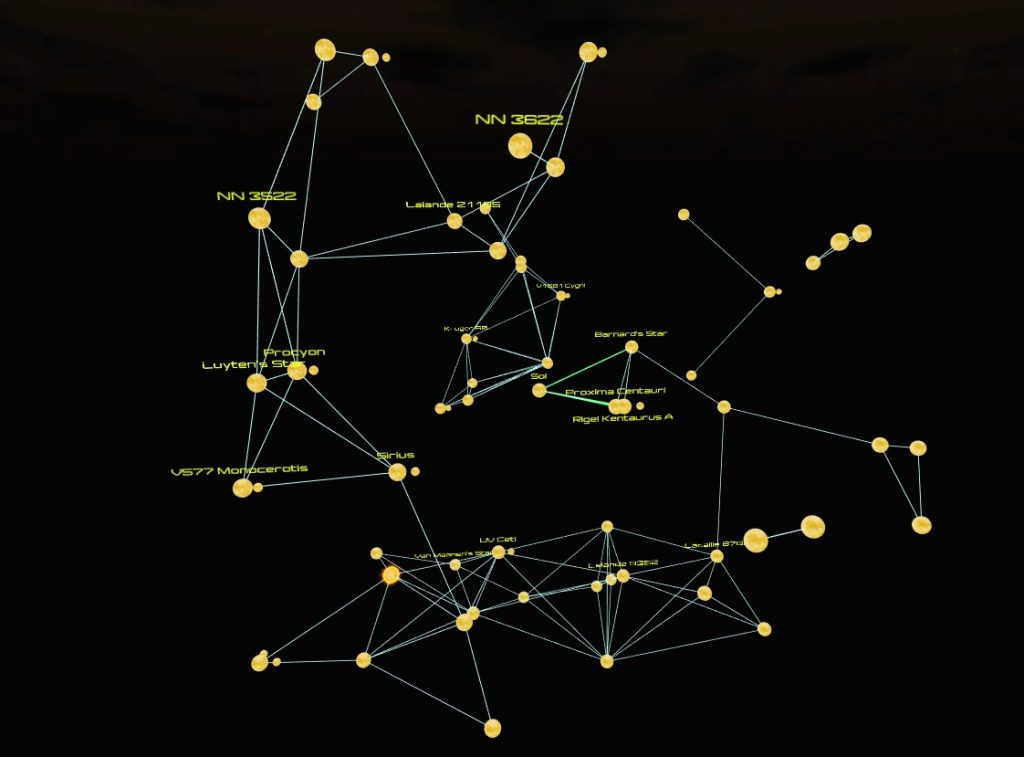
45,000 real stars with astronomically accurate positions. Interfaces that allow you to navigate, build routes, select star systems, and enter them seamlessly.
Planet Map
All planets and moons — except gas giants, worlds with gaseous surfaces, or planets with extreme gravity, temperature, or pressure — feature fully mapped surfaces. The number of surface tiles depends on the body’s size, with Earth-sized planets containing up to 40,000 large-scale tiles.
Each tile is procedurally calculated with its own terrain type, elevation, moisture level, seasonal temperatures, and many other parameters influenced by tectonic activity, planetary position, stellar radiation, and additional environmental factors.
Every tile also contains calculated natural resources generated from numerous geological and environmental parameters. Resources are finite, with more than 120 different resource types in the game — though naturally only a fraction of them can be found on any individual tile.
Star Systems
Planetary systems for almost every star, containing planets of all sizes and types, moons, comets, large asteroids, and asteroid belts — all with calculated characteristics, composition, temperatures, and realistic orbital mechanics. 1,395,000 major celestial bodies and 2,145,000 minor bodies and asteroid belts.
Surface map
Each large planetary tile represents a territory roughly 100 km in diameter and is further subdivided into smaller tiles, totaling approximately 700,000 small tiles per large tile. These small tiles are about 100 × 100 meters in size and form detailed terrain including landforms, water bodies, and vegetation where applicable.
Together, they generate a fully simulated landscape map where buildings can be constructed, explorers can move across terrain, and military units can engage in defense or combat operations.
Economic system / in dev
The system includes more than 4,000 products and materials in the current database, interconnected through over 10,000 dependency relationships.
In the final version, the total scope is expected to grow to approximately 6,000–7,000 products, materials, and finished goods.
This will form a highly complex economic simulation system, the most intricate ever implemented in a game, with deep production chains, resource dependencies, and interconnected manufacturing processes.
Starship construction / in dev
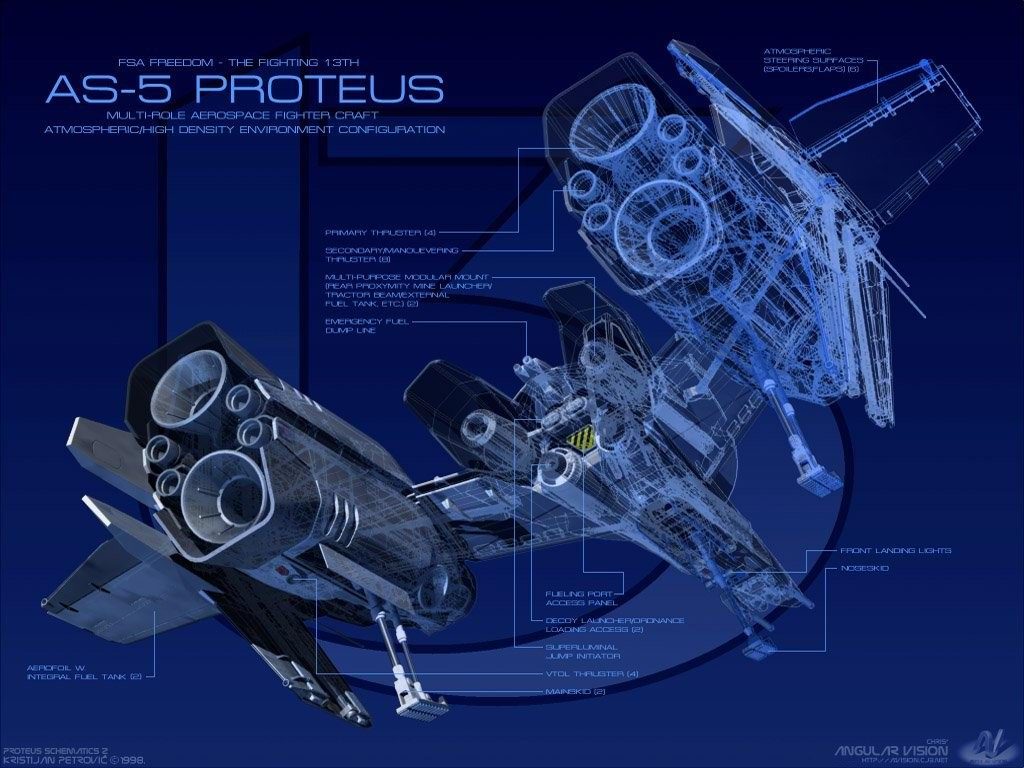
Ships are constructed from modular components, including backbone structures, armor, cabins, gas balloons, cargo holds, landing gear, and approximately 80 additional subsystem types. Each system can vary in scale, ranging from a single block to large multi-block assemblies.
A functional ship must include essential systems such as energy sources, thermal regulation, navigational equipment, a mainframe, and other critical infrastructure. Without these, the vessel becomes an inert and non-functional structure.
The current focus is on balancing internal structural frameworks to allow players to design ships without requiring real-world space engineering knowledge, while still aiming for a deep, fully simulated technical ship design system in the final implementation..
Ships flights.
Spaceships can land on and lift off from planets and moons, travel within star systems, perform interstellar jumps, unload cargo on planets, and load cargo at spaceports. All flights take place in realistically scaled star systems, where travel can require significant time even with time acceleration enabled.
Population and Agents simulation / dev
The population of each colony is not composed of simple human units. They have attributes such as beliefs, education level, experience, and cultural background. Populations are also divided into major functional groups, from toddlers to pensioners, and additionally segmented by age.
Every birth year cohort is simulated separately. This means that sustained changes in education quality or policy over a decade can have long-lasting consequences spanning 50–70 years or more.
Population life cycles are fully modeled: individuals are born, grow up, attend school and higher education, enter the workforce or service roles, and eventually age into retirement.
At the current stage, the simulation supports approximately 7,000,000,000 individuals across six major factions. A more advanced subsystem is also active for special roles such as agents and criminals. These entities have individual stats, perks, experience, and levels.
Agents represent highly capable individuals who can serve as captains, generals, scientists, explorers, or intelligence operatives. Criminals operate under their own hidden mechanics and systems, which remain intentionally undisclosed.
Both groups age, decline over time, and eventually die, making the transfer of knowledge and experience across generations a critical part of the system.
At present, roughly 700 agents and 500 criminals are actively simulated in detail.